






I have been playing Minecraft since the alpha days, back when the world was nothing but grass blocks, stone, and the occasional pig that would stare at you with those blank little eyes while you desperately tried to build a mud hut before nightfall. My eldest discovered it around age five, and I remember the exact moment she placed her first torch inside a cave and said, “Dad, I made it safe.” That was about eight years ago now, and we still load up the same survival world from time to time, a sprawling mess of half-finished castles and underground railways that no cartographer could make sense of. Minecraft endures because it keeps evolving, and the 2026 update is one of the most substantial the game has received in years — new biomes, new mobs, crafting overhauls, and a few quality-of-life improvements that veteran players have been requesting since the Stone Age (the real one, not the in-game one). If you’re just getting started, you might want to brush up on some Minecraft beginner tips first, but for everyone else, here’s what’s changed.
New Biomes & World Generation
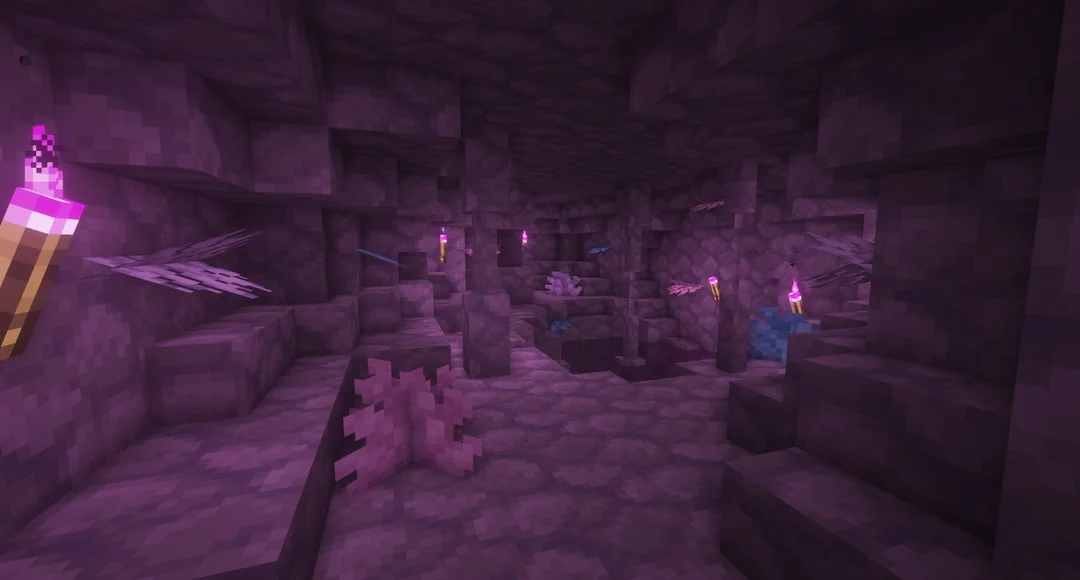
The headline addition is the Pale Hollows, a sprawling underground biome that generates beneath cold-climate regions and feels like someone combined the lush caves with something out of a Guillermo del Toro film. Bioluminescent fungi cling to the ceiling, pale vines hang in curtains from the stone, and the ambient sounds are genuinely unsettling — low hums, distant dripping, the occasional echo that makes you spin around expecting a mob that isn’t there. It’s atmospheric in a way Minecraft rarely attempts, and it works beautifully. The biome contains its own stone variant, hollite, which can be polished for building and has a lovely blue-grey tint that pairs well with deepslate.
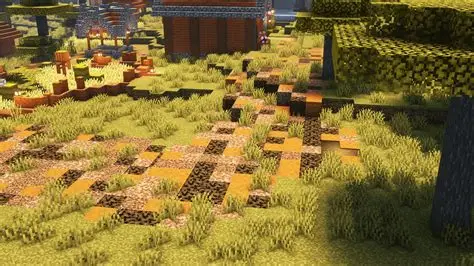
Above ground, the Scorched Savanna brings arid, cracked terrain dotted with termite mounds and dried riverbeds. The colour palette is warm oranges and dusty yellows, and it feels genuinely different from the existing desert and badlands biomes. Baobab trees spawn here — massive, thick-trunked things that take up a 3×3 block footprint and produce a new wood type with a lovely reddish tone. World generation has also been tweaked more broadly, with smoother transitions between biomes and more natural-looking coastlines. Cliff faces are steeper, rivers wind more convincingly, and there’s a noticeable improvement to how forests thin out at their edges rather than stopping abruptly like a wall of foliage.
New Mobs & Creature Behaviour
Three new mobs headline the update, and for once, none of them are trying to kill you immediately. The Hollow Crawler inhabits the Pale Hollows and is a passive-until-provoked arthropod roughly the size of a spider but slower and less aggressive. Disturb one and it emits a shriek that summons others nearby, which creates a genuinely tense dynamic when you’re mining through their territory. They drop chitin fragments, which are used in the new armour crafting recipes.

The Meerkats appear in the Scorched Savanna and behave much like the real thing — standing upright on mounds, ducking underground when threatened, and alerting each other to nearby hostile mobs. They can be tamed with beetles (a new ambient creature) and will act as early-warning sentries near your base, squeaking when hostile mobs spawn within a reasonable radius. It’s a genuinely useful mechanic wrapped in an adorable package, and my youngest has already declared them “the best thing ever added to any game.”
The third new mob is the Gloom Wraith, a rare hostile mob that spawns in deep dark biomes adjacent to the Pale Hollows. It’s translucent, floats, and cannot be damaged by conventional weapons — you need to craft spectral arrows using ectoplasm (dropped by the Wraith when exposed to light) to deal damage. It’s a proper mid-game challenge and adds a reason to return to the deep dark beyond ancient cities.
Crafting & Resource Changes
The crafting table interface has received its most significant overhaul since, well, ever. A new recipe book tab organises craftable items by category rather than a single scrollable list, and a search bar has finally been added — something modders solved years ago but the vanilla game never addressed. There’s also a “quick craft” option that lets you craft maximum quantities of an item with a single shift-click, rather than clicking repeatedly like a woodpecker with a caffeine problem.
Two new ore types arrive with this update. Cobalt generates in the Pale Hollows between Y-levels -20 and -50 and sits somewhere between iron and diamond in terms of tool durability, but with a unique property: cobalt tools have increased mining speed in underground biomes. It’s a niche advantage but a meaningful one for dedicated miners. The second addition is sunite, a surface-level ore found in Scorched Savannas that can be smelted into solar ingots. Solar ingots are used in a new tier of light-source blocks that emit light based on the time of day — dim at night, brilliant at noon — which opens up some fascinating building possibilities.
Copper continues its gradual rise to usefulness. You can now craft copper pipes that transport water between containers, and copper grates function as proper drainage blocks. If you’ve been stockpiling copper since the Caves and Cliffs update, your patience is finally being rewarded. For more ways to transform your builds, check out some of the best Minecraft mods that complement these new vanilla features.

Redstone & Quality-of-Life Improvements
Redstone engineers will be delighted by the addition of the signal relay block, which transmits redstone signals wirelessly over short distances (up to 16 blocks). It doesn’t replace traditional wiring for complex contraptions, but it eliminates the need for ugly redstone trails running across builds where aesthetics matter. Pair it with the new copper pipes and you can create water-based mechanisms that look genuinely clean.
The inventory management improvements are less flashy but arguably more impactful for daily play. Auto-sorting chests are now a vanilla feature — craft an amethyst shard onto a chest and it organises contents alphabetically. Bundle functionality has been expanded so they now stack up to 128 items rather than 64, making them actually worth using. And the enchanting table now shows precise probabilities for each enchantment rather than vague glyphs, which removes the guesswork that frustrated newer players.
Accessibility options have been expanded substantially. A new colour-blind mode adjusts ore textures with distinct patterns rather than relying solely on colour differentiation, subtitles now include directional indicators, and there’s a “simplified controls” option that consolidates some of the more fiddly multi-button interactions. Mojang has clearly been listening to the community feedback on this front, and it shows.
Multiplayer & Cross-Play Updates
Bedrock and Java edition parity continues to improve, though true unification remains elusive. The most notable change is that Java players can now join Bedrock-hosted Realms (and vice versa) through a new cross-play bridge feature, though it’s currently labelled as experimental and has a few rough edges — redstone behaviour still differs slightly between versions, which can cause issues with complex mechanisms. Still, the ability to play with friends regardless of platform is a significant step forward and something the community has wanted for years.
Server performance improvements mean larger player counts run more smoothly, with chunk loading optimised to reduce the lag spikes that plagued busy servers. A new “spectator lite” mode lets players observe without full spectator privileges — they can fly around the overworld but can’t clip through blocks or see player inventories, which makes it useful for server administrators and content creators without the griefing concerns. The reporting and moderation tools have also been refined, with clearer appeals processes and more granular control for server owners over what gets flagged.
For more Minecraft guides and coverage, visit our Minecraft hub where we cover updates, builds, mods, and tips for players of all ages.
Frequently Asked Questions
When does the Minecraft 2026 update release?
The update has been rolling out across platforms throughout spring 2026, with Java Edition typically receiving snapshots first followed by Bedrock Edition. Check the official Minecraft launcher for the latest version number and patch notes specific to your platform.
Will the new biomes generate in my existing world?
Yes, but only in chunks you haven’t explored yet. Any terrain already generated will remain unchanged. If you want to access the Pale Hollows or Scorched Savanna, you’ll need to travel to unexplored areas of your map. Alternatively, you can start a new world to experience the updated world generation from scratch.
Is cobalt better than diamond?
Not overall. Cobalt sits between iron and diamond in terms of durability and damage, but it has a unique speed bonus when mining in underground biomes. Think of it as a specialist tool rather than a direct upgrade — you’ll still want diamond or netherite for your primary gear, but cobalt picks are excellent for dedicated caving sessions.
Can I tame the new Meerkat mob?
Yes. Feed a meerkat beetles (found as ambient creatures in the Scorched Savanna) and it will become tamed. Tamed meerkats act as early-warning sentries, squeaking when hostile mobs spawn nearby. They won’t follow you like wolves but will stay in the area where they were tamed, making them ideal for base perimeters.
Does the cross-play bridge work between Java and Bedrock?
It does, though it’s currently labelled as experimental. Java players can join Bedrock Realms and vice versa. There are still some differences in redstone behaviour and a few minor feature disparities, but for survival gameplay the experience is largely seamless. Expect further refinements in future patches.
What’s the best way to find the Pale Hollows?
The Pale Hollows generates beneath cold biomes — snowy tundra, frozen peaks, and cold ocean floors are your best starting points. Dig down to around Y-level -30 and look for hollite stone and bioluminescent fungi. The biome is large when it generates, so once you find the edge of one you’ll have plenty to explore.
Has the Warden been changed in this update?
The Warden itself hasn’t received major changes, but the new Gloom Wraith mob adds another threat to the deep dark adjacent areas. The Warden remains the most dangerous mob in the game and is still best avoided rather than fought. The addition of the Pale Hollows near deep dark regions does mean you’re more likely to encounter Wardens while exploring the new content, so bring wool and stay quiet.
Latest
-

Salvation Denied
-
Driftland: The Magic Revival
-
The Planet Crafter Is Coming to Consoles in July
-
Go North: Atmospheric Maze Adventure
-
Unyverse: Afrofuturist Action RPG
-
The Mound: Omen of Cthulhu Demo Launches During Steam Next Fest
-
Woodo: Handcrafted Wooden Puzzle Game Captures Childhood Wonder
-
The Walking Dead: Streets of Survival









Latest Previews
Lost Gems
-
Top 10 Meta Quest 2 Games For Children
-
Stormforce Gaming & The Prism iCue 6209
-
Licensed Xbox Games for Kids 2022/23
-
New Mods for Minecraft Bedrock 2023
-
The 6,6,6 Scariest Games of 2022
-
5 Great Udemy Courses For New Game Developers
-
Hearthstone Alternatives For Lovers of Card Games
-
My Top 10 Star Wars Games of All Time
-
5 of the Most Interesting Mobile Games at EGX Rezzed
-
11 Wicked Witches in Video Games | Halloween Special
-
Beginners Guide to Pokemon Go [Updated]
-
Advanced 2D and 3D Game Development Software
-
My Top 5 Boxing Games
-
Parents Guide to Minecraft
-
10 Great Kids Games From 2016 on Xbox One




















You must be logged in to post a comment Login