



My daughter came home from school last year and casually told me she’d learned about supply chains. She’s eight. I asked her where she’d picked that up and she said “Minecraft” with the sort of withering look that only a child can give a parent who’s just asked an obviously stupid question. She’d been trading emeralds with villagers, working out that wheat was cheaper to farm than diamonds were to mine, and had essentially stumbled into basic economics while trying to build a castle shaped like a cat. No worksheet could have done that.
That moment crystallised something I’d suspected for a while – the best educational games don’t feel educational at all. They feel like games. The learning happens sideways, almost by accident, while your child is too busy having fun to notice they’re absorbing physics, logic, history, or maths. This is my list of the best educational video games for kids in 2026, covering ages roughly four to twelve. Every game here has been tested on actual children (mine, mostly), and every one teaches something genuinely useful without resorting to the dreaded “quiz between levels” approach that makes kids reach for the off switch. If you’re also looking for the best VR games for kids, we’ve covered that separately.
Creativity & Engineering
These are the games that teach kids to build, design, experiment, and break things in productive ways. They reward curiosity, and the learning sticks because the child is the one driving it.
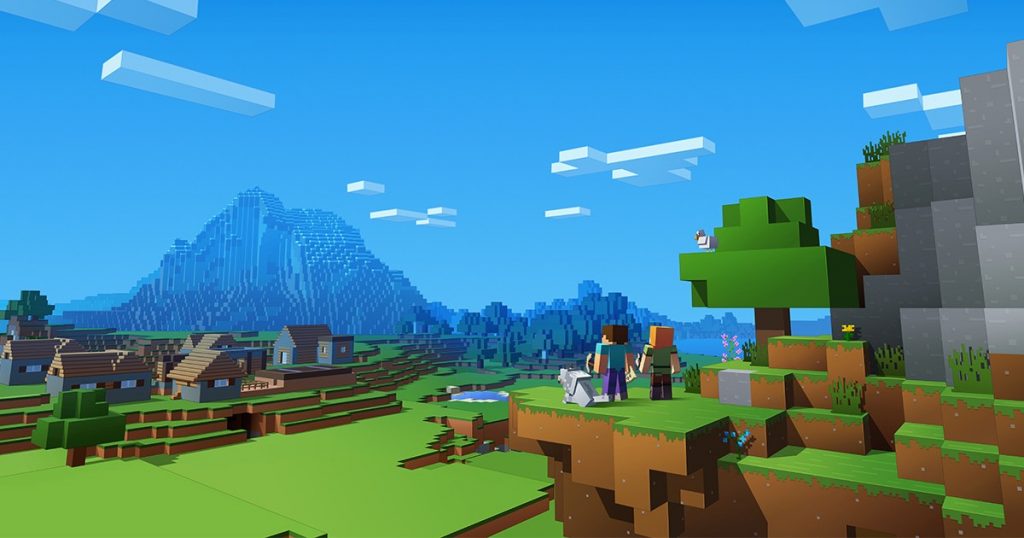
Minecraft (ages 6+) – I know, I know, everyone recommends Minecraft. But it’s on every list because it genuinely earns its place. Creative mode is freeform construction with no limits, Survival mode teaches resource management and planning, and Redstone is essentially an introduction to electrical circuits and Boolean logic that most adults couldn’t explain as well. The Education Edition adds chemistry, coding blocks, and structured lessons, but honestly the base game does plenty of teaching on its own. My daughter’s Minecraft phase taught her more about spatial reasoning than two years of geometry worksheets.

LEGO Builder’s Journey (ages 5+) – A beautiful, quiet puzzle game about placing LEGO bricks to create paths through abstract environments. It teaches spatial awareness and creative problem-solving with zero text, zero pressure, and a soundtrack that’s genuinely lovely. Short enough that younger children finish it feeling accomplished rather than exhausted.

Scribblenauts (ages 7+) – Type any word you can think of and it appears in the game world as an interactive object. Need to cross a river? Type “bridge.” Or “helicopter.” Or “friendly rideable dinosaur.” It teaches vocabulary, lateral thinking, and the delightful discovery that the English language contains more nouns than any child imagined. The joy on a kid’s face when they type “zombie T-Rex” and it actually works is something special.
Maths & Logic
Maths games have historically been dreadful — sums wrapped in a thin layer of cartoon paint that fool absolutely nobody. These are the exceptions. These ones actually work.

Prodigy Math (ages 6-12) – A free-to-play RPG where battling monsters requires solving maths problems matched to your child’s curriculum level. It adapts difficulty automatically, tracks progress for parents, and my daughter played it voluntarily for months before she realised it was the same maths she complained about at school. The free version is perfectly functional; the paid membership adds cosmetics but not learning content.

DragonBox Numbers (ages 4-8) & DragonBox Algebra (ages 8+) – The DragonBox series is quietly brilliant. Numbers teaches addition and subtraction through a game about feeding and combining adorable creatures called Nooms. Algebra -and this is the clever bit – teaches actual algebraic manipulation by disguising equations as visual puzzles. Children solve for X without ever seeing the letter X. By the time the game reveals what they’ve been doing, they’ve already internalised the concepts. Proper stealth education.

Human Resource Machine (ages 9+) – Tomorrow Corporation’s puzzle game teaches programming logic by having you direct a little office worker to move boxes around. Each puzzle is essentially a coding challenge – loops, conditionals, branching – presented without a single line of actual code. It’s tricky enough that some adults struggle with the later levels, which makes it ideal for bright older children who need a genuine challenge. Its sequel, 7 Billion Humans, adds parallel processing concepts and is even harder.

Big Brain Academy: Brain vs. Brain (ages 5+, Switch) – Nintendo’s party-friendly brain training game pits family members against each other across five categories: identify, memorise, analyse, compute, and visualise. The difficulty scales per player, so your five-year-old and your twelve-year-old can compete fairly. It’s the rare “educational” game that the whole family genuinely wants to play after dinner.
Science & Space
If your child has ever asked “why doesn’t the moon fall down?” or “what happens if you mix everything together?”, these games will keep them busy for weeks.

Kerbal Space Program (ages 9+) – Build a rocket, launch it, watch it explode. Build a better rocket, launch it, watch it reach orbit and then explode. Repeat until you’ve accidentally learned Newtonian physics, orbital mechanics, and the sobering reality that space is very hard. KSP doesn’t dumb anything down — the physics are real, the failures are spectacular, and the satisfaction of a successful Mun landing is genuinely comparable to a real achievement. My nephew spent a summer playing this and started correcting his science teacher on orbital velocity. She was not amused. He was not wrong.
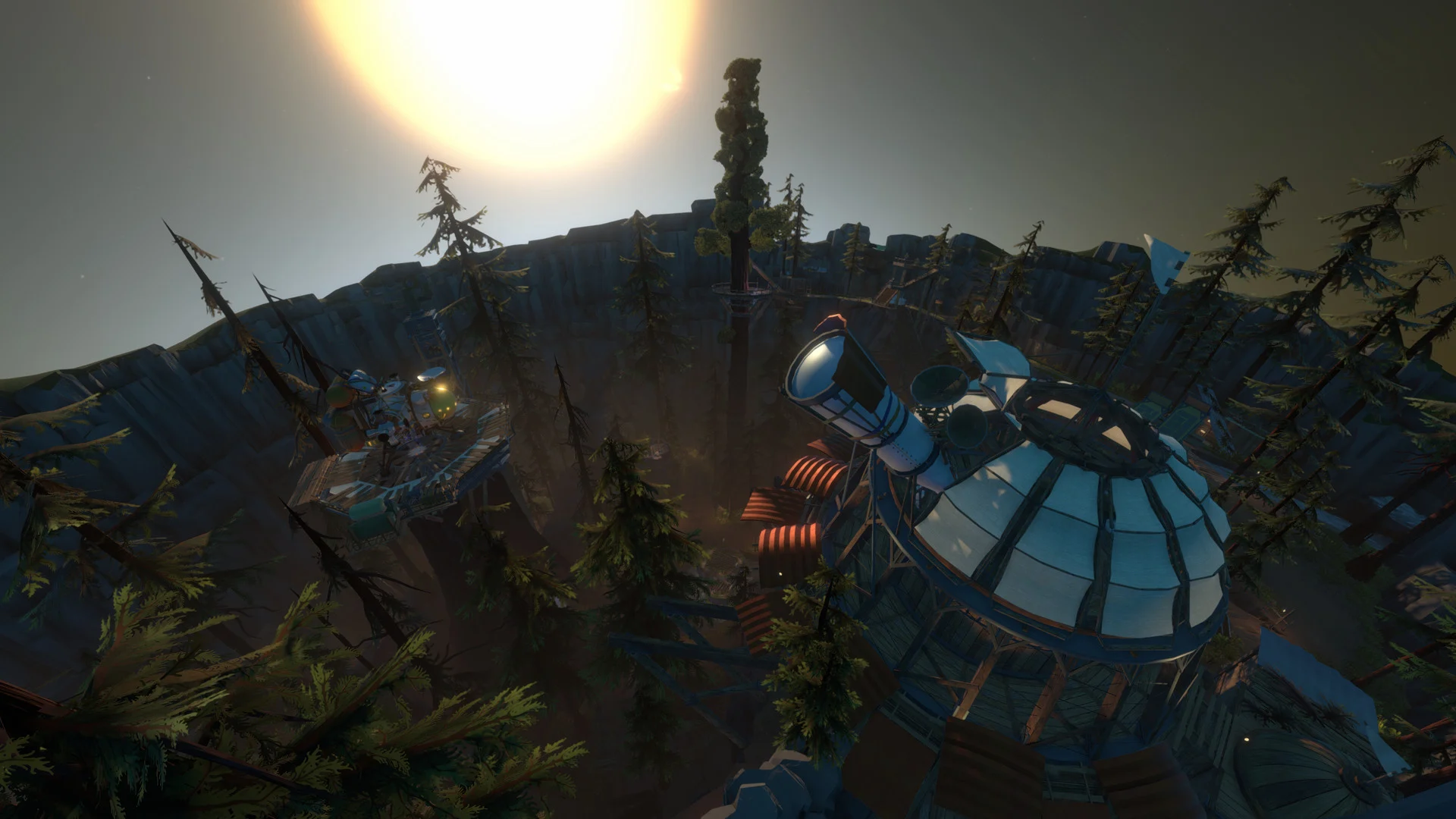
Outer Wilds (ages 10+) – Less a traditional educational game and more a masterpiece of scientific curiosity. You explore a hand-crafted solar system where every planet has its own physics puzzle, and the only way to progress is by observing, hypothesising, and testing – the actual scientific method, wrapped in one of the most atmospheric games ever made. It teaches kids to pay attention, ask questions, and trust their own reasoning. Mildly spooky in places, so judge your child’s tolerance.

National Geographic Challenge / Earth (ages 6+) – Nat Geo’s quiz-based games cover geography, wildlife, and earth science in a format that works well for families. They’re not the flashiest games on this list, but the content is genuinely excellent and the difficulty ranges from “suitable for a six-year-old” to “stumping the adults.” Good for car journeys on a tablet.
History & Geography
History is stories, and games are brilliant at telling stories. These ones just happen to be true – or at least historically plausible enough that your child won’t embarrass themselves at school.

Civilisation VI (ages 10+) – Sid Meier’s strategy masterpiece lets your child guide a civilisation from the Stone Age to the Space Age, making decisions about technology, diplomacy, warfare, and culture along the way. My son played as Egypt for a week and then delivered an unsolicited lecture about irrigation at the dinner table. The Civilopedia alone is an education – every technology, wonder, and leader comes with historical context that children actually read because they want to know why their new building matters. It’s long, it’s deep, and it’s worth every hour.

Where in the World is Carmen Sandiego? (ages 7+) – The classic geography game has been revived and updated multiple times, and the core concept still works beautifully. Chase a thief around the world using geographical clues, learning about countries, capitals, landmarks, and cultures along the way. The Netflix tie-in version and the Apple Arcade edition are both solid, and there’s something wonderful about a game that’s been teaching children geography since 1985. Some things don’t need reinventing.
Assassin’s Creed Discovery Tour (ages 10+) — Ubisoft stripped the combat out of Assassin’s Creed Origins and Odyssey and created guided museum-style tours through Ancient Egypt and Ancient Greece. You walk through historically accurate environments with narration from actual historians. It’s not a game in the traditional sense — there’s no fail state, no objectives beyond curiosity — but as a tool for making history feel tangible and real, it’s extraordinary. Available standalone, so you don’t need to buy the full game.
Typing & Language Skills
Typing is one of those skills that schools somehow still don’t teach properly, and reading comprehension underpins everything. These games handle both with considerably more flair than a traditional approach to children’s gaming would suggest is possible.
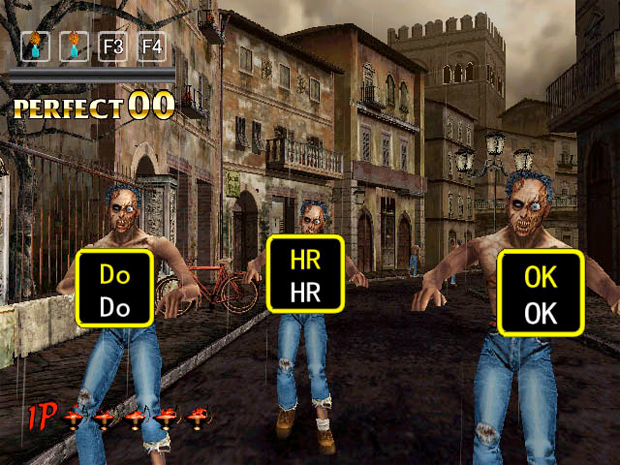
Typing of the Dead: Overkill (ages 10+, with parental judgment) — A typing tutor disguised as a zombie rail shooter. Words appear on screen, you type them before the zombies reach you, and your speed and accuracy improve dramatically because the alternative is being eaten by the undead. It’s gory in a campy, B-movie way — parents should preview it first — but as a typing motivator it is unmatched. My typing speed is 90 words per minute and I credit this game entirely.
Epistory: Typing Chronicles (ages 8+) — A gentler typing adventure set in a paper-craft world. You ride a fox through origami forests, defeating enemies and solving puzzles by typing words. It’s beautiful, it’s progressive in difficulty, and it teaches touch-typing through genuine gameplay rather than repetitive drills. Perfect for the child who needs typing practice but finds Mavis Beacon about as exciting as watching cement dry.

Brain Training (ages 6+, Switch/DS) — Dr Kawashima’s classic brain-training series has been a fixture since the DS era, and the Switch version is still excellent. Daily exercises in maths, reading, memory, and processing speed, tracked over time so your child can see their own improvement. It’s not glamorous, but the short daily sessions build habits, and the competitive multiplayer mode means siblings will actually fight over who gets to do maths next. That alone is worth the price of admission.
The best educational games share one quality — they respect children’s intelligence. They don’t patronise, they don’t interrupt gameplay with pop quizzes, and they trust that a well-designed system teaches through interaction rather than instruction. Every game on this list does that, and every one of them has taught my kids something they still remember.
Find more recommendations for younger players in our parents gaming series, and if you’re after platform-specific picks for the little ones, we’ve got plenty more where this came from. The trick is finding games where the learning is the fun, not the obstacle between your child and the fun… and these are exactly those games.
Frequently Asked Questions
What is the best educational video game for kids in 2026?
Minecraft remains the single best educational game for children, offering creativity, engineering, basic coding (via Redstone), resource management, and spatial reasoning across a huge age range. For maths specifically, DragonBox and Prodigy Math are outstanding. For science, Kerbal Space Program is unrivalled.
Are educational video games actually effective?
Yes, when they’re well designed. Research consistently shows that game-based learning improves engagement and retention compared to traditional methods. The key is that the learning must be embedded in the gameplay, not bolted on as a separate quiz. Games like DragonBox and Kerbal Space Program teach through play mechanics, which is why they work where flashcard apps fail.
What age should children start playing educational games?
Simple touch-based games like DragonBox Numbers work well from age four. Most children can handle more complex games like Minecraft by six, and logic-heavy titles like Human Resource Machine suit ages nine and above. Follow your child’s interest rather than pushing — a bored child learns nothing regardless of how educational the game claims to be.
Is Minecraft educational or just a game?
Both, and that’s the point. Minecraft teaches spatial reasoning, resource management, planning, basic engineering, and (through Redstone) logic circuits. The Education Edition adds structured lessons in chemistry, coding, and history. But even vanilla Minecraft in Creative mode is a powerful learning tool — children design, build, fail, redesign, and iterate, which is the engineering process in miniature.
Are free educational games as good as paid ones?
Some are. Prodigy Math is free and genuinely excellent for maths practice. Minecraft Education Edition is free for schools. However, many free educational apps rely on adverts or aggressive monetisation that disrupts learning. Paid games like DragonBox, Human Resource Machine, and Kerbal Space Program tend to offer a cleaner, more focused experience without distractions.
How much screen time should kids spend on educational games?
Most paediatric guidelines suggest limiting total screen time to one to two hours per day for children under twelve, though educational content is generally viewed more favourably than passive consumption. The real measure is engagement quality — a child actively problem-solving in Kerbal Space Program is using their brain very differently from a child passively watching YouTube. Use common sense, set limits, and watch for signs of fatigue.
Can educational games replace school learning?
No, and they shouldn’t try to. Educational games are best used as supplements — they reinforce concepts, build curiosity, and let children practice skills in a low-pressure environment. They’re particularly good at making abstract subjects (like algebra or orbital mechanics) feel tangible and concrete. Think of them as the homework your child actually wants to do.
Latest
-

Unyverse: Afrofuturist Action RPG
-
The Mound: Omen of Cthulhu Demo Launches During Steam Next Fest
-
Woodo: Handcrafted Wooden Puzzle Game Captures Childhood Wonder
-
The Walking Dead: Streets of Survival
-
Skatesterre: New Arcade Skateboarding Game Announced for Summer 2026 Release
-
My Top 10 Boxing Games (2026)
-
Valor Mortis: First-Person Soulslike with Vincent Cassel as Napoleon
-
Undisputed in 2026: Bigger, Better and Unbeaten



Latest Previews
Lost Gems
-
Top 10 Meta Quest 2 Games For Children
-
Stormforce Gaming & The Prism iCue 6209
-
Licensed Xbox Games for Kids 2022/23
-
New Mods for Minecraft Bedrock 2023
-
The 6,6,6 Scariest Games of 2022
-
5 Great Udemy Courses For New Game Developers
-
Hearthstone Alternatives For Lovers of Card Games
-
My Top 10 Star Wars Games of All Time
-
5 of the Most Interesting Mobile Games at EGX Rezzed
-
11 Wicked Witches in Video Games | Halloween Special
-
Beginners Guide to Pokemon Go [Updated]
-
Advanced 2D and 3D Game Development Software
-
My Top 5 Boxing Games
-
Parents Guide to Minecraft
-
10 Great Kids Games From 2016 on Xbox One








You must be logged in to post a comment Login